

Maybe it's the zeitgeist, or the chatter around the office, but I've been thinking a lot lately about the idea of nearest megawatts: how to get more power capacity ASAP, whether that means generation or storage. It's kind of the new car effect. When you buy a new car, you suddenly see it everywhere. I've been seeing so many examples of companies looking for ways to get more capacity now.
This won't be comprehensive, but there seem to be a lot of ways to do it.
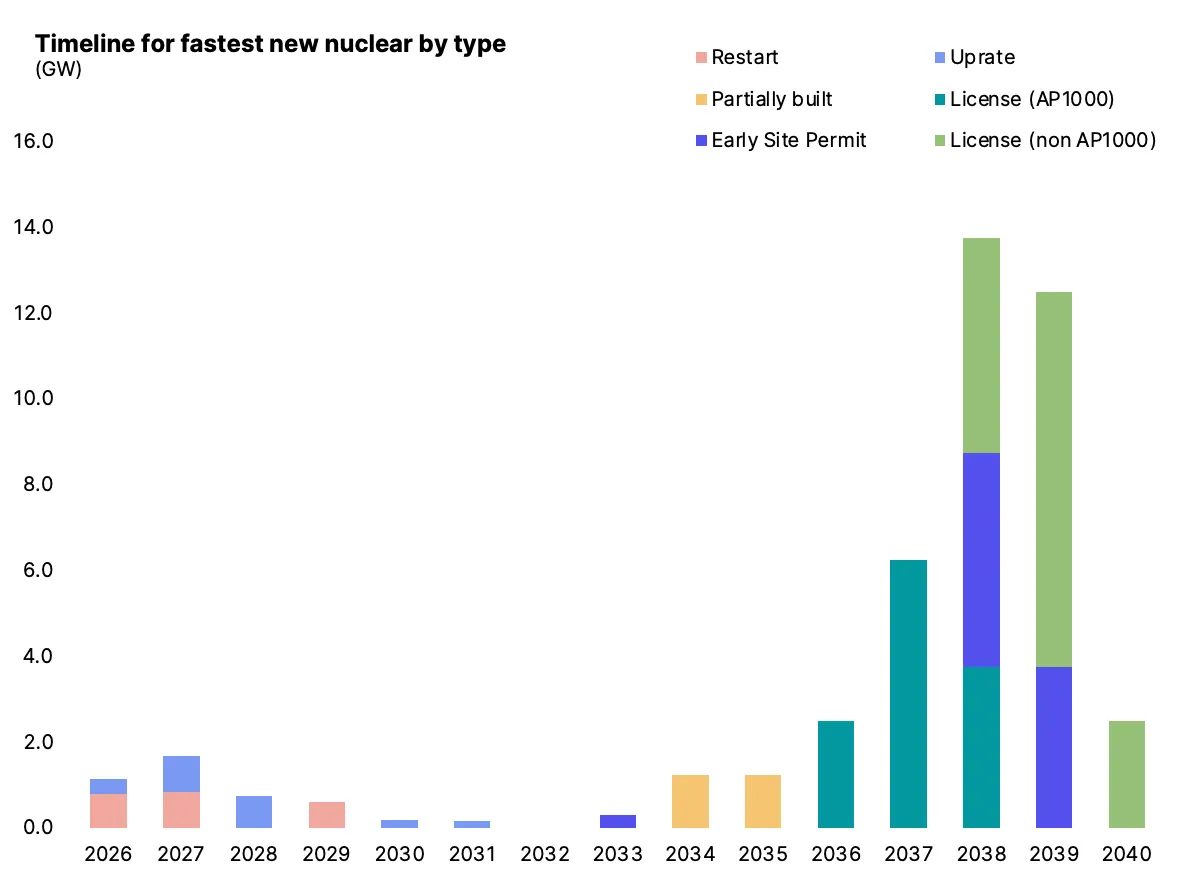
1. Uprate what you've got. This is the squeeze-more-juice-from-the-lemon approach. According to our power analyst Guy Cohen, there's a lot of quick, clean, firm power out there, obtainable with lower risk than building entirely new projects. In nuclear generation, for example, uprating means boosting the output of an existing plant, typically through equipment or fuel upgrades (see chart below).
In geothermal, it means using emerging techniques like AI subsurface modeling and directional drilling to boost output without the costly exploration, permitting, and construction hurdles that slow greenfield projects. Guy wrote about this a few weeks ago.
2. Figure out how to build faster. On October 6, Duke Energy unveiled plans to deploy conventional nuclear reactors and a fleet of small modular units by 2037 to meet surging power demand in the Southeast. It would be Duke's most ambitious nuclear buildout in a generation. Nuclear's resurgence isn't a new story, but Duke's stated strategy is interesting. It's choosing sites that limit red tape, ones that already have licensing and site prep either completed or underway.
In another recent piece, Guy talked about exactly this and found that the US could add 45GW of new nuclear capacity by 2040 by focusing on partially built or permitted sites.
3. Get creative. I saw a story the other day that Carrier, the 100-year-old HVAC company, announced a pilot putting batteries in AC units so they function as distributed energy resources (DERs). My jaw dropped. I was struck by the creativity and, dare I say, elegance of the solution. Embedding a battery in every AC unit could turn millions of homes into resilient, grid-connected assets without requiring homeowners to install or manage anything new.
Maybe it'll catch on and every AC unit will have a battery. Maybe it'll change the form factor of ACs to fit bigger batteries. Maybe it'll flop. Either way, it's a simple, potentially fast way to add capacity and resiliency to the grid. I suspect we'll see more ideas like this in the DER space as power prices, demand, and reliability concerns keep rising.
And this is all generation and storage. The other new car effect is everything gridtech, or getting more out of the grid we've got. It's everywhere right now.
To track uprates, restarts, and fast-to-power projects across generation and storage, download the full Fastest MW report from Currence or request a 20-minute call with our team.