
The Groundhog might have predicted another six weeks of winter, but this week, we're focusing on another kind of freeze. We've got a new deep dive into what Trump’s federal funding freeze — and its rescission — mean for projects.
DOE policy limbo
The climate tech sector is feeling the whiplash after a rollercoaster of Trump administration announcements in the past couple weeks. The new administration briefly announced a freeze on federal grants and loans across multiple programs, before then getting thawed by order from a federal judge. (Still, the White House press secretary has indicated that a funding freeze is still a part of Trump’s plans.)
While the sector holds its breath to see which way the winds will blow, we took a look at the data to see what’s at stake in US public funding for climate tech.
What happened
In the past four years, a historic amount of grant and loan money has flown into climate transition-related projects and companies across geographies and sectors, from nuclear to hydrogen to carbon capture to geothermal. The funding was earmarked for these purposes via laws like the BIL/IRA and CHiPs Act. The low-cost-of-capital public funding has been catalytic in getting several new projects off the ground, especially by de-risking follow-on private investment.
Now, with the latest funding freeze these types of back-and-forth announcements have created confusion for founders, funders, and developers alike. Some companies have “closed” commitments, where the funding is understood to be secure, but receive tranches of capital dependent upon hitting pre-determined milestones. Other companies are still in negotiations for the full amount of their conditionally committed funding. It’s unclear how much of any of this funding can be clawed back through legal channels, but the uncertainty still makes it difficult for everyone involved. We rounded up these announced projects to see what’s at stake, how much is on the line, and where it’s all located.
How much capital is at risk? In short, at least $145bn. On the debt side, from the publicly available data, there’s a total of 50 loans worth $102.2bn. It looks like $50.4bn of this in 21 deals is safe, or at least safe-er, as they’re listed as closed. But about $51.8bn across 29 loans is at least a bit more vulnerable, as these are still listed as conditionally committed. There’s also $42.9bn across 1,066 grants, but whether or not they’re conditional is not yet clear.
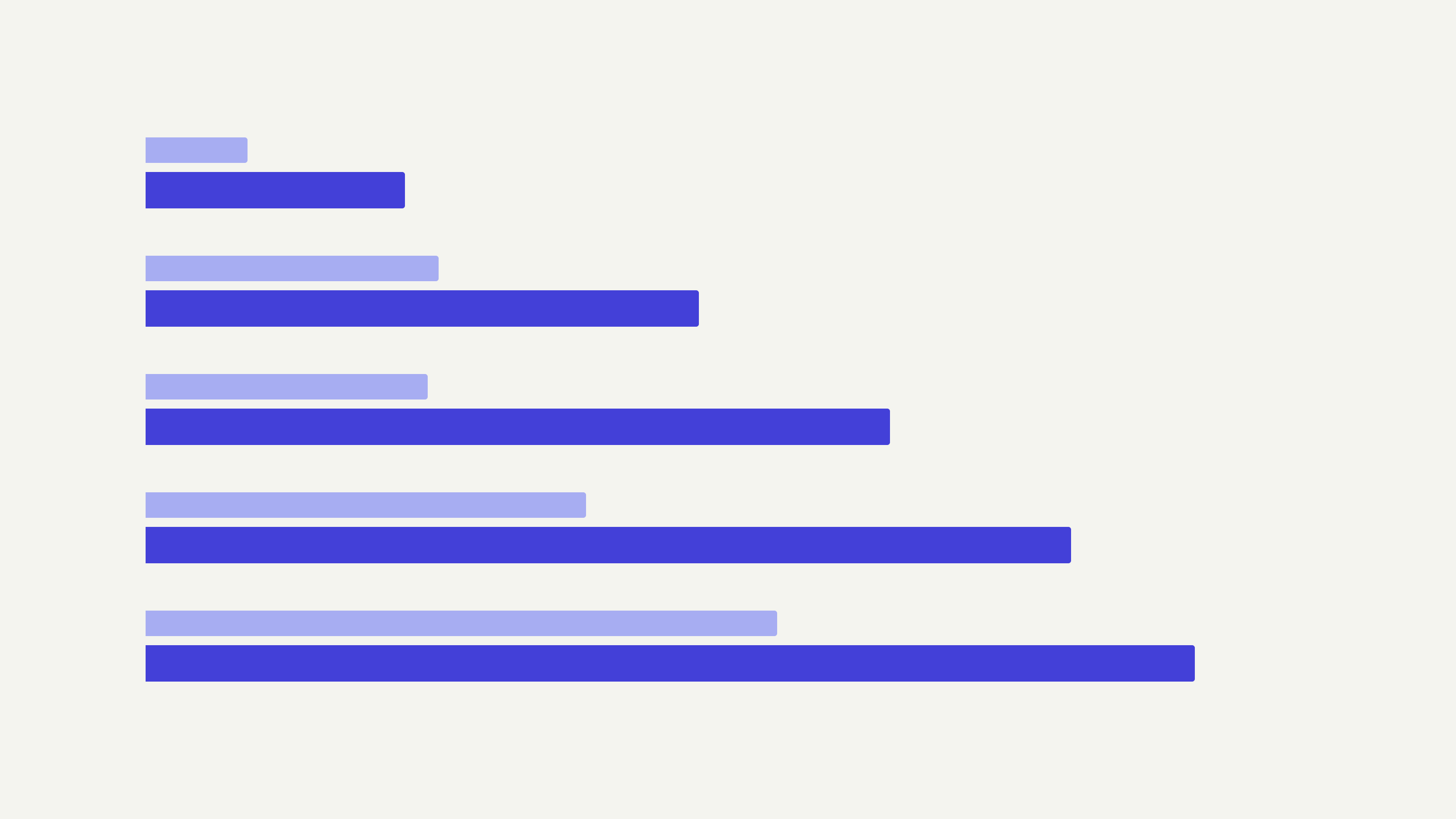
Of both grants and loans, the biggest recipient sector was the battery supply chain, with $33.7bn across 57 deals. Most of the other top funding sectors are focused on decarbonizing and firming the grid, with $19.4bn for virtual power plants, $18.2bn for renewables and storage, and $13.6bn for transmission infrastructure, coinciding with Biden’s goals of increasing energy security and lowering power sector emissions.

With that much funding at stake, there will be a tug-of-war in Congress, but the teams aren’t obvious. Out of the total number of loans and grants with disclosed locations (nearly 1,000), 561 of those awards — 60% — are located in states that voted Republican. That entails $83.1bn for red states, and $28.7bn for blue states. (An additional $34.3bn in funding was allocated to multi-state projects that span both red and blue states, as well as projects whose location was not disclosed.) Seeing this coming, last fall, a group of House Republicans asked the Speaker Mike Johnson to keep IRA programs like the clean energy tax credits in effect, as their states benefited from them.

Meanwhile, 56% of the announced loans are still conditional commitments — 29 out of the total 50 — so they face a higher risk of being rescinded. That comes to ~$51.8bn in conditional loans, out of the total loan amount of $102.2bn.


Right now, it’s all eyes on DOE HQ as the incoming Secretary, Chris Wright, takes the helm. It’s yet unclear what’s on his full agenda, but what is clear is that there’s a push from Republicans to keep, and cut, funding under these programs – we’ll just see who pushes hardest.
Key takeaways
- Projects aren’t partisan. The potential funding freeze creates significant uncertainty for projects in both red and blue states. With $28.7bn for Democratic-voting states and $83.1bn for Republican-voting states, the impact is not politically clear-cut.
- Change is coming at DOE. The new Energy Secretary, Chris Wright, is likely to be confirmed and start as soon as this week. With previous experience in fracking and geothermal energy, he could push those sectors ahead. But over half of announced loans are conditional commitments across various sectors, meaning they're particularly vulnerable to political disruption. This uncertainty can delay critical infrastructure projects and/or make private investors hesitant to commit follow-on funding. Additionally, expect some turnover from DOE staff, many of whom, like the rest of federal employees, have been offered a buyout.
- Some sectors likely to move ahead regardless. Nuclear cleanup projects have already received special exemptions to continue to receive funding. Plus, streamlined permitting could accelerate new and retrofit nuclear projects, but other technologies that sit outside the clean firm or baseload camp might be vulnerable.

.png)